
Inside Your Mouth: Tooth Numbers, Names, Care, and Common Problems
Your teeth do much more than help you chew food. They play an important role in everyday tasks we often take for granted like speaking clearly, maintaining facial structure, and supporting your overall health. Understanding the basics of your teeth can help you make informed decisions about your oral health and recognize when it’s time to seek professional care.
In this article, we’ll explore the different types of teeth you have, the Canadian tooth numbering system (did you know your teeth have assigned numbers?), good oral hygiene habits, common dental problems, and signs that indicate it’s time to pay a visit to your Dentist.
Understanding Your Teeth: The Basics
How Many Teeth Do Adults Have?
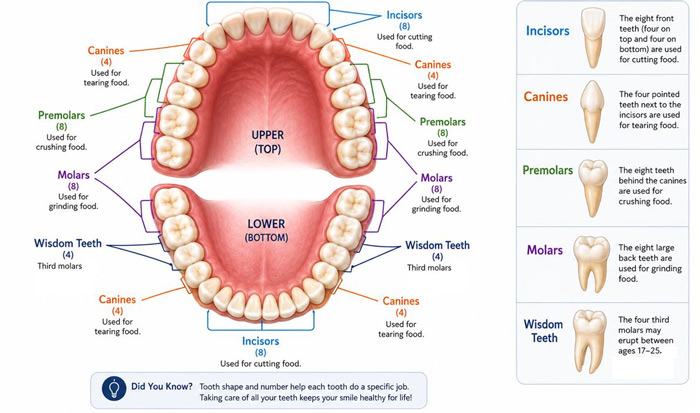
Most adults have 32 permanent teeth, including four wisdom teeth. However, many people have fewer due to wisdom tooth extractions, missing teeth, or developmental differences.
How Many Teeth Do Children Have?
Children typically have 20 primary teeth, often called baby teeth. These begin erupting around six months of age and gradually fall out as permanent teeth emerge, usually beginning around age six.
What Are Teeth Made Of?
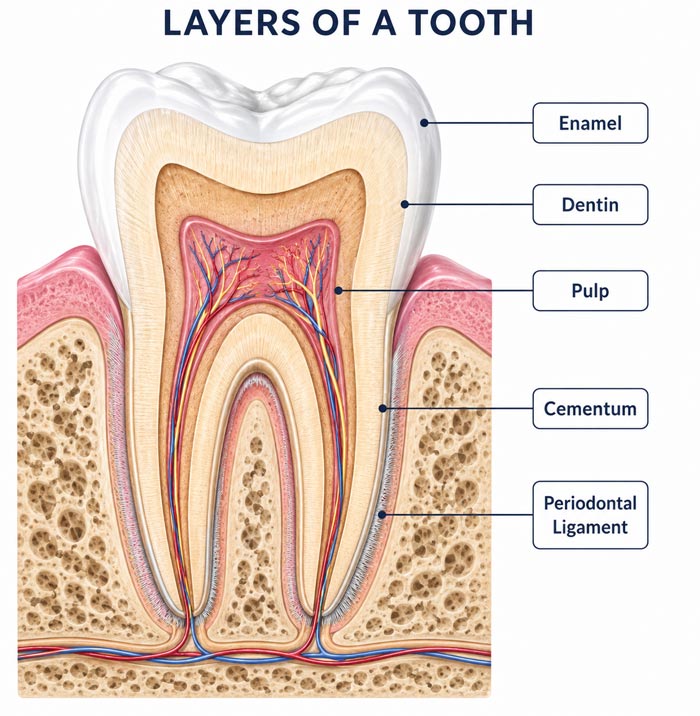
Although teeth may seem simple from the outside, they are actually made up of several complex layers, all serving a different purpose
Enamel – The hard outer layer that protects the tooth. Enamel is the hardest substance in the human body.
Dentin – Located beneath the enamel, dentin is less dense and contains microscopic tubules that can contribute to sensitivity.
Pulp – The soft inner tissue containing nerves and blood vessels.
Cementum – A specialized layer covering the root of the tooth.
Periodontal Ligament – Fibers that connect the tooth root to the surrounding bone.
Types of Teeth and Their Functions
Incisors
Incisors are the eight front teeth located in the upper and lower jaws. Their primary role is cutting and biting food.
Canines
Canines are the pointed teeth beside the incisors. They are designed for tearing food and are often the strongest teeth in the mouth.
Premolars
Premolars sit between the canines and molars. Adults have eight premolars, which help crush and grind food.
Molars
Molars are the largest teeth in the mouth and are responsible for heavy chewing and grinding.
Wisdom Teeth
Wisdom teeth are the third molars that typically erupt between ages 17 and 25. Some people experience no issues, while others may require extraction due to crowding, infection, or impaction.
Understanding the Canadian Tooth Numbering System
Dental professionals use a standardized numbering system to identify specific teeth quickly and accurately.
Canada commonly uses the FDI World Dental Federation notation system, which assigns each tooth a two-digit number.
The first digit identifies the quadrant:
- 1 = Upper Right
- 2 = Upper Left
- 3 = Lower Left
- 4 = Lower Right
The second digit identifies the tooth’s position from the center of the mouth.
For example:
- Tooth 11 = Upper right central incisor
- Tooth 12 = Upper right lateral incisor
- Tooth 16 = Upper right first molar
- Tooth 18 = Upper right wisdom tooth
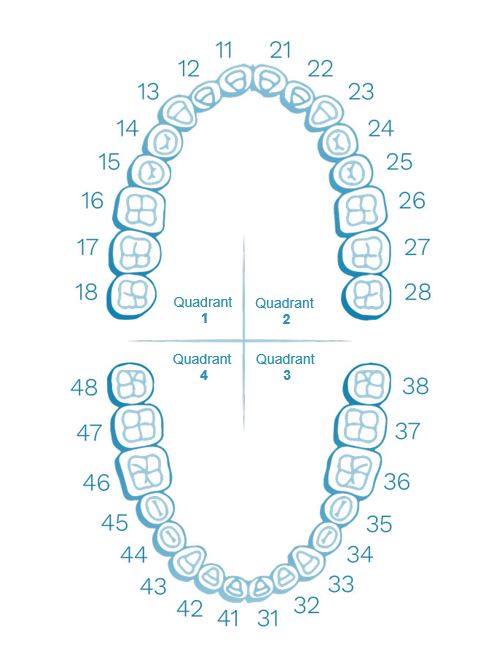
This numbering system helps Dentists chart findings and accurately communicate treatment plans within their own practices as well as with other healthcare providers.
6 Fast Facts About Teeth
- Teeth Are the Hardest Substance in the Human Body. Tooth enamel is even harder than bone, making it remarkably durable.
- Teeth Begin Developing Before Birth. The foundations of baby teeth begin forming while a baby is still in the womb.
- Every Person’s Teeth Are Unique. Like fingerprints, no two individuals have identical teeth.
- Saliva Helps Protect Teeth. Saliva neutralizes acids, washes away food particles, and supplies minerals that help strengthen enamel.
- Enamel Cannot Regrow. Once enamel is lost, the body cannot regenerate it naturally.
- Teeth Can Reveal Clues About Overall Health. Many medical conditions, nutritional deficiencies, and sleep disorders can show signs within the mouth.
How to Keep Your Teeth Healthy
Brush, Brush, Bush
Spend at least two minutes brushing twice a day, and ensure all surfaces of each tooth are cleaned, using a soft-bristled toothbrush. Regular brushing is an easy way to prevent tooth decay and gum disease. It removes the bacteria that can cause tooth decay and plaque, a process that begins soon after eating, so ideally you should brush after meals whenever possible.
You Actually Need to Floss
Yes, your Dentist and Dental Hygienist can tell whether or not you’ve really been flossing on a regular basis. Flossing removes plaque and food debris from areas your toothbrush cannot reach, so if you have a lot of plaque build-up, there’s a good chance it’s because you haven’t been flossing regularly enough. Daily flossing significantly reduces the risk of cavities and gum disease, so taking 30 seconds out of your day to floss is worth it!
Use Mouthwash When Appropriate
Antimicrobial or fluoride mouth rinses can provide additional protection when recommended by your dental professional.
Eat Tooth-Friendly Foods
Healthy foods that support oral health include:
- Dairy products
- Leafy green vegetables
- Nuts
- Lean proteins
- Crunchy fruits and vegetables
Limit Sugary and Acidic Foods
Frequent exposure to sugar and acid increases the risk of cavities and enamel erosion. Common culprits include:
- Soft drinks
- Sports drinks
- Candy
- Sticky snacks
- Citrus beverages
Don’t Skip Your Dental Visits
Don’t wait until you have a toothache to visit the Dentist, maintain your regularly scheduled visits to keep your mouth as healthy as possible. Professional examinations and cleanings help identify issues before they become larger, more expensive problems.
Common Tooth Problems
Cavities
Cavities occur when the bacteria in your mouth produce acids that damage tooth enamel. The bacteria uses food left behind or sugary drinks to create cavities. They present as permanent tiny holes (cavities) or damaged areas that form on the surface of the tooth, and they need to be filled (usually with composite resin, porcelain, or amalgam). Leaving a cavity untreated will eventually lead to a tooth extraction (no thank you!).
Signs that you might have a cavity include:
- Sensitivity
- Pain when eating sweets
- Visible holes or dark spots
- Toothaches
It’s also important to note that you can have a cavity without feeling any of the symptoms above. In some cases, the tooth looks healthy from the outside while decay is beginning on the inside. Don’t wait until you’re feeling symptoms – keep up with your regularly scheduled dental visits to avoid cavities and unnecessary pain.
Tooth Sensitivity
Sensitivity may result from worn enamel, grinding your teeth, cavities, or gum recession – when the gum tissue pulls away from the teeth, exposing the root. In general, if a tooth is sensitive, there’s a good chance a nerve is being exposed somewhere. Let your hygienist know if you have a sensitive tooth before your next appointment so they can be careful not to irritate the sensitive area during your cleaning.
Sensitive teeth may react to:
- Cold drinks
- Hot foods
- Sweet foods
- Brushing
Bruxism (Teeth Grinding)
Many people grind or clench their teeth during sleep, or while awake, without even realizing it. Your Dentist is able to observe the signs of Bruxism during a regular dental exam and should notify you if there is any indication of worn teeth. Once identified, Bruxism should not be left untreated as it can lead to headaches, a sore jaw, and cause damage to your teeth.
Signs that you may be grinding your teeth include:
- Worn teeth
- Jaw pain
- Morning headaches
- Tooth fractures
- Facial muscle fatigue
Cracked or Chipped Teeth
Even though we have enamel to help protect our teeth, sometimes it’s just not enough.
Teeth can fracture due to trauma, biting hard objects, or long-term grinding. Older teeth are also more susceptible to cracking and chipping due to weakened enamel that naturally happens over time. At South Shore Dental, we offer Emergency dental care as well as Cosmetic Dentistry to assist patients with unexpected tooth trauma.
Gum Disease
Gum disease begins as gingivitis and can progress to periodontitis if left untreated. One easy way to prevent gum disease? You guessed it. Brushing and flossing!
Warning signs of gum disease include:
- Bleeding gums
- Red or swollen gums
- Persistent bad breath
- Gum recession
- Loose teeth
Protect Your Smile for Life
Your teeth are designed to last a lifetime, but they require proper care and regular professional attention. Understanding how your teeth function and how to recognize potential problems can help you maintain a healthy smile for years to come.
By practicing good oral hygiene, keeping your regular dental visits on track, and seeking treatment when concerns arise, you can reduce your risk of dental disease and enjoy the benefits of a healthy mouth and confident smile for years to come.
If you have questions about your oral health or are due for a checkup, contact South Shore Dental today. Our expert team is committed to helping patients of all ages achieve their dental goals and maintain excellent oral health!
Frequently Asked Questions
How Often Should I Visit the Dentist?
Most patients benefit from examinations and cleanings every six months, though some patients may require more frequent visits. Your Hygienist or Dentist will guide you on how frequent your visits should be, based on your oral health. Regular visits will allow for shorter appointments.
Can Cavities Heal Naturally?
Early enamel demineralization may be reversed with fluoride and improved oral hygiene.
Is Bleeding While Flossing Normal?
Bleeding is often a sign of gum inflammation and usually improves with consistent oral hygiene. If bleeding persists or does not improve after several weeks of regular flossing, you should be evaluated by a Dentist.
Do Wisdom Teeth Always Need Removal?
No. Wisdom teeth only require removal when they create problems or pose a risk to your oral health.
What Is the Best Toothbrush?
A soft-bristled toothbrush or approved electric toothbrush is generally recommended.